Thursday, December 24, 2009
Counting down towards the PDC
I really didn’t know what to expect returning to the site after over a year. In terms of the growing systems, however, I was blown away. The long dry season has stunted the first year’s growth of many fruit trees, weakening them and triggering a few diseases (including leaf scale on a few mangos and aphids on a few citrus, which the trees now seem to be outgrowing themselves with the rains). Yet about 90 of the 100 or so fruit trees I remember going in are alive and growing strongly, reaching for the sky with soft green fresh growth. The swales have been doing their thing to divert, slow and infiltrate water, and the top swale trench is filled with about 50 cm of moist organic matter and silt, the water having carried in the plentiful grevillia leaves from uphill. The legumes (cassia, leucaena, pigeon pea) sown as seed are coming up all over along the swale mounds, and in places are almost two metres high (the cassia seem to be growing slightly faster than the leucaena which is interesting). Vetiver grass and comfrey has grown strongly and has been separated out and replanted. It’s interesting that many of them have only germinated after a year of sitting in the ground, now they are emerging everywhere and are here to stay. The tallest trees so far are a moringa (4m +) and a couple of mulberries in the entrance areas (about 3m+). On Monday Nyero, Bukenya, Paul Kotu, Will (Sabina is lucky to have this fine fellow on board!) and I gave about half the fruit trees (totaling perhaps 200 now including mangoes, avocados, guavas, mulberries, jackfruit and moringa) a three course snack of comfrey leaves, worm castings (yes the worm farm is cranking!) and fresh cow manure, topped by cardboard and mulch to reduce grass competition. With the legumes coming up on either side of the fruit trees, it’s exciting to think that many of the fruit trees will not only have a support tree at their service during the next dry season, proving windbreak, shade, and nitrogen, but that their roots will be well down into the moisture accumulating in the trench above them.
The mandala garden is being managed by the kitchen staff and house mothers, who are planting strong locally-grown vegetables (eggplant, nakati and carrots) amongst the passion fruit dripping from above, the pawpaws within some beds, and four very healthy avocados which mark the beginning of a gradual transition over the next three or four years from vegie garden to food forest. The small round garden in the middle of the entrance area started by a few of the house mothers is continuing to produce plenty of veggies, and there are large scale plantings of sweet potato, Irish potato and beans coming along well.
What else – there is a lot going on! The tanks are full (100,000litres worth) and the taps are working fine, though the guttering and pipe work need a bit of attention (the tanks lack overflow outlets so when full the water backfloods back up the gutter!). The large vegie garden has recently been wrestled back into shape by Will and Sabina interns Nyero, Robin, Sharon and Charles, and there is a fair bit of food online and at different stages of maturity. As for accommodation, the new bandas are unexpectedly luxurious! 68 Chickens are starting to lay (I think only about 5 eggs per day so far) and are in great health. They are weird chickens by Australian standards though – they won’t yet eat worms!
Kim and Clive’s work organizing implementation of the tanks, bandas, chicken system and large vegie garden is awesome as is Ralph’s work on the worm farm, paths, trees and Mike’s conversion of the entrance area from dust to grass and trees. A group of us harvested worm castings to not only fertilise fruit trees but to set up an experiment comparing watermelon grown with nothing, with cow manure, with worm castings and with both. Hopefully outcomes will be evident during the PDC in January.
Socially things are hard to assess as the children and many staff are absent, and I understand that progress has been slow and in some places negative, with the students not being interested overall in gardening and the staff mostly busy with their own agendas. However, on Tuesday we interviewed 14 potential Ugandan assistant farm managers with several showing promise in terms of integrating gardens, the school and the home, and the local woman Anna who has been working in the large vegie garden is back on deck in a couple of days.
The financial sustainability of the project is far from a sure thing, though 80 avocados will go in shortly, an initial beehive is there and waiting for some occupants to arrive, and plans are afoot for major eucalypt planting on the 100 acres adjoining the main school area. So there are major challenges to be negotiated, and I look forward to seeing how things progress after the PDC and over the next year.
Monday, September 21, 2009
September Update from Clive and Kim
It’s lovely to be joined by Ralph (a volunteer from NSW Australia) with great practical skills and farming experience. Ralph has been supervising and teaching a group of secondary students (who were here for the holidays) to dig and prepare planting holes for an avocado orchard and a eucalyptus woodlot. So far 70 holes (with pan swales) have been prepared for the ungrafted avocado seedlings and 100 holes for the eucalypt. We are waiting for a few good rains before we plant the trees …
Ralph slashing grass mulch for the orchard trees – “this isn’t as easy to do as Nyero makes it look!”
Nyero relaxed and happy as he digs a pan swale in the soon-to-be avocado orchard
Everyone is asking the question “when will the Wet Season begin”. We’ve been teased by a few light rains but then it returns quickly to hot and dry, dry, dry. Our supply of water from the water tanks ran dry yesterday … the fact that we lost 15,000L from a leak (in June) has meant that we’re quite a bit short this Dry Season.
Ralph has also been busy constructing a permanent home for our compost worms (brought all the way from Australian by Dick Copeman in 2008). They are now comfortably housed next to the compost bays in a 3-compartment worm farm with its own shade structure using an old iron bed frame, left-over wood from construction and with a little help from a local carpenter. We hope to breed up loads of worms to feed the chickens and to use castings and worm wee in the vegetable growing areas. They use of compost worms seems to be entirely new to Ugandans but Anna is very keen to learn more and to use this resource.
We also have 70 gorgeous chicks in residence.
Rico amazed by the tiny 2-day old chicks (they’re the blobs slightly larger than the woodchips)
At 3 weeks old and looking scruffy as they lose their chick fluff
After an initial fright with coccidiosis (a common disease from commercial hatcheries) the chicks appear to be doing very well and Kim is enjoying being the Mother Hen.
Clive overheard a Sabina child talking seriously to another .. explaining that these are “layer hens, to lay eggs for the school children” – spot on!
One of the flocks at 5 weeks old
The Large Vegetable Garden is taking shape well under Anna’s supervision but the vegetables are all hanging out for some rain. The main crops are silverbeet, cabbage, collards, garlic, chilli with interplantings of herbs (eg dill, basil, coriander). Some of the garden beds are being visited by red ants and the most effective control seems to be chill/garlic spray (used sparingly). Anyone have some other suggestions?
Anna and a helper doing the evening watering
Anna at one of the taps (water coming from the tanks at the school)
Watering the vegetables each day is a time consuming job for a numer of people. There is a need to provide shade in the Large Vegetable Garden and to carefully plan the types and amount of plantings during the Dry Season.
And, of course, there is always time for some socialising, which usually takes place around food …
Charles perfecting his pancake flipping skills
Some happy pancake customers
Some of our Permaculture helpers during school holidays – Irene, Paul, Opio
Opio happily anticipates a goat meal (Ralph hung the meat overnight in the banda, where it’s cool)
And, finally, one of our ‘friends’ along the path to Ssanje ...
Tuesday, August 11, 2009
August Update from Sabina
We are feeling a little dry ourselves on the project with some hassles around the building project and a shortage of labour for the veggie garden. But we are regrouping, planning and expecting a break in the drought soon [stay tuned!]
Kim and Clive have moved into their banda accommodation which is very comfortable, cool and perfectly located near the boarding house (but not too near!). The concrete floor is still sweating so we can’t place mats on the floor or put our suitcases under the bed, but it’s just a matter of time. We’re having a ball sitting on our ‘private’ verandah at the back doing our latest craze of cooking mountains of popcorn with lots of salt, yum.
The second banda requires only ten more days of work to be completed and it is now long past its due finish date so we’re keen to see it finished. Unfortunately the main roofer fell off the roof a couple of weeks ago and broke his arm! (The steep pitch of the roof is proving to be a little intimidating to some of the local roofers). We are confident that this banda will provide adequate, cool accommodation for up to eight people at a time.
The 2nd banda, and our poor roofer .. not long before he fell off the roof.The compost structure has also acquired a lovely, cool grass roof –

Now that the building phase of the project is coming to an end we are turning our energies to establishing the chicken system and to productive veggie growing areas. Seventy layer hens are due to arrive on 5th August, after a frustratingly long wait. We have a completed chicken house and strawyards .. but no hens yet!
As shortage of labour and distribution of water have been the limiting factors in growing vegetables to the level we want to, we have employed a Ugandan woman (Anna) with the major responsibility of vegetable growing (and care of the chicken system in the future). Anna will join us from 3rd August. We are also waiting for the arrival of Ralph, a volunteer from Australia, who will provide some extra labour, practical help and advice.
In the meantime …
Carl harvests some comfrey leaves to make ‘tea’ for the seedling beds in the Large Vegetable Garden
Kayinga modelling with the veggies.
Derrick, Amos and Joash.
Dan helping with the daily watering
Bukenya harvests the first cabbage from his bed in the Large Vegetable Garden!
Bukenya and Rico join a group of us for end-of-week refreshments on our verandah.
Brisbane Fundraiser makes over $4000 for Sabina
Entry - which got you into the event with an amazing line-up of world-class musical acts, talks (including one from Dick Copeman at Northey St City Farm), and performances. Art from Nyero Christopher (a key helper on the permaculture project who features in many earlier posts) was displayed and cards bearing copies of his work were sold. Thanks Nyero!
The stage and some excellent rap-artistry going down, yo. There was even a banda for food sales and this big bamboo stage this group called the Boo Crew volunteered their time for.
Early on with folks starting to arrive. The event went from 10am till 10pm so was a very full day.
The ever-gorgeous Amanda with the menu of fine Ugandan fare which was prepared and sold on the day. Banana pancakes, rolex (egg roll) and posho (maize cake) and beans. Everyone loved it, though unlike the Sabina children they don't have to eat it every day for lunch and dinner!
The phenomenal Janey who basically organised the whole event. Amazing person.
Ana Heke during one of the performances. In this one banana meets bamboo and forms a happy unity.
An amazing fire dance as the darkness arrived.
Then upstairs where hone from New Zealand led an auction where donated goods and services were auctioned off. It was a hoot, and the room was packed with happy faces.
Thanks also to Christian for his fine MCing along with all the musicians and performers and helpers for helping make this happen. And thanks to Cafe Chococo (69 Hardgrave Rd, West End, Brisbane) for proving such a wonderful venue. The $4000 raised will go a long way on the ground at Sabina!
Monday, June 29, 2009
Volunteer
To start ASAP, preferred length of stay 3-4 months.
This project has been going for close to a year (see
www.childrenofuganda-
You will be privileged to be part of a very special school community.
There are three permaculture volunteers and two other volunteers from
Australia and the US.
You must
• have experience in growing food in a tropical climate
• be resilient enough to cope with basic living conditions
• be strong and fit for work in the garden
• appreciate and enjoy the value of another culture
• be keen to have an adventure!
Clean, simple accommodation and all meals are provided at a cost of
US$25 per week.
Come and join us!
Responses to clivemullett@gmail.com
The Wet Season is Over
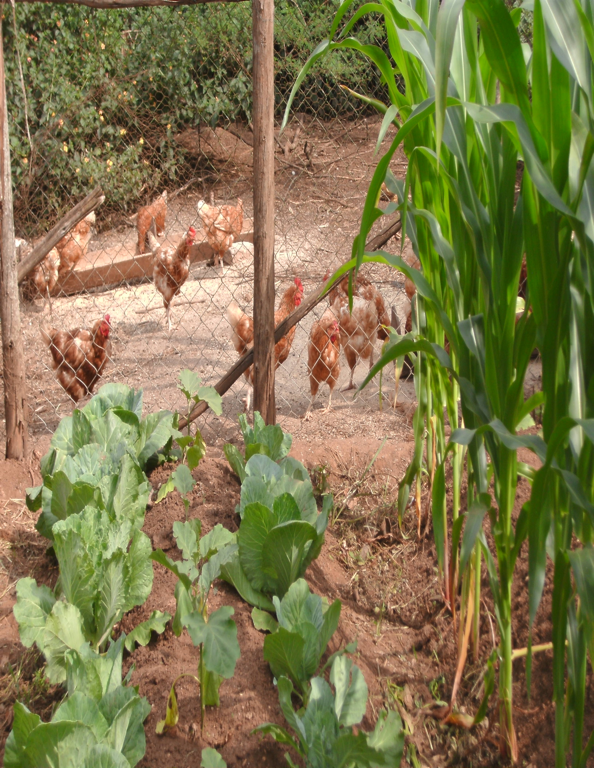
We ordered 70 day-old chickens a couple of days ago and hope to take delivery soon, by which time our chicken house and brooder will be ready to receive them…this is an exciting, nerve-wracking time and it will be great to have some little animals to look after. We have been planting vegetables and medicinal herbs around the Strawyards to aid in the chooks’ diet. They will lay 200+ eggs per week (we hope), enabling a valuable improvement in the kids diet. Thanks Permaculture North for your generous donation which has paid for the construction of the new shed!!
The almost-completed chicken house & strawyardsWe (Kim and Clive) have also reached a milestone with the bandas (volunteer and visitor accommodation) and will be moving into the small Banda this weekend, after 6 months living in a room in the Presbytery next to the School. We hope to start a week-long housewarming party involving lots of pancakes, cups of tea and coffee, roasted G-nuts and cookies...
John Bosco & Bukenya in front of the almost-completed small BandaThe large banda, to accommodate up to 8 people at a time, is also underway, here is a shot of the roofing truss in progress.

The new Large Vegetable Garden is proving to be the major challenge at the moment with a shortage of labour being a real constraint. So, we have posted a volunteer opportunity for someone to join us who has experience in growing food in the tropics .. if you know anyone, please put them in touch with us. Currently the staff are fed vegetables everyday and the children twice a week (and we would obviously like to make this 7 days a week). We have been building a covered compost structure over the last month or so, and this is becoming a critical item to complete, as uncovered compost just doesn’t seem to work well – either it rains hard and soaks it, or the hot sun bakes it.
A welcome addition to the Sabina team recently has been Rico, assisting the school in a number of ways but also a keen member of our permaculture team when he is available. Here he is (in red) with John Bosco (in yellow), Andrew (kneeling) and Samuel assisting with watering of the fruit trees in the evening...Rico has agreed to help us out with that important task a few times each week.

We’ve enjoyed watching the children as they practice their singing and dancing for Education Week which began last Sunday. Usually Sabina does well in this competition and we will be cheering them along as they compete. Hope these pictures give you a sense of the colour and fun …


Friday, June 26, 2009
Wereba Mukwano
On May 30th we farewelled Mike Cloutier after around 8 months volunteering at Sabina. Mike will be remembered for his tireless commitment to planting and nurturing 180 fruit trees (mango, avocado, mulberry, loquat, custard apple, tangerine, pomegranate, Indian water berry, jackfruit, guava…) and for the friendships he developed with many of the children, who will miss him.Mike joined the project in late 2008 as Dan and Amanda prepared to depart, and held down the role of Project Manager until January, then continued as a volunteer, also helping another project part-time. Mike was a smiling face in the dining area and was known for long late-night reading stints, as well as being prepared to eat ‘anything’.
Mike is travelling home to Canada via England, then he plans an extensive trip into the Arctic Circle, before he settles down to a steady job and raises a family (just kidding Mike).
Best wishes for your future permaculture projects and thanks for volunteering with us.